No Stupid Questions: Episode 1
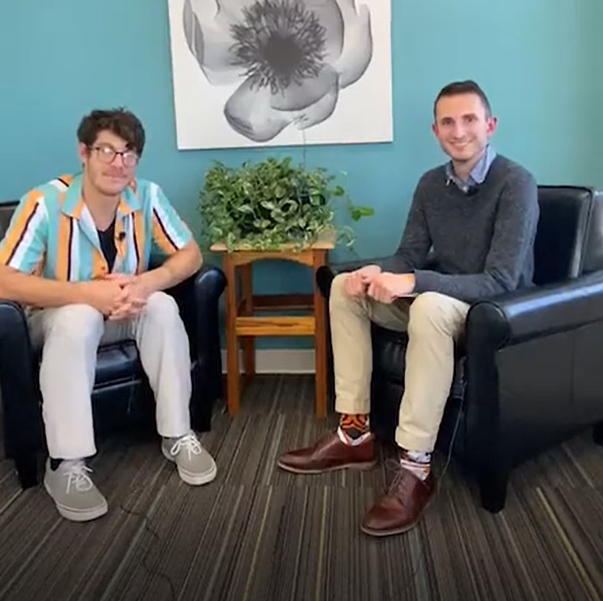
Sit down for a conversation between Jesire Bennett and Katie McCabe, LCPC, for the VERY FIRST EPISODE of No Stupid Questions. Jesire asks how people can get started on the path toward sobriety, the role relationships play in their journey . . . and even a few questions from the audience!
Jesire Bennett: Hi, I am Jesire. I work in the front office at Resource Group and I’m here with Katie McCabe.
Katie McCabe: And I’m one of the counselors who works here at Resource Group.
JB: So today we have some questions for Katie. Today’s segment is called No Stupid Questions, a show where we ask simple questions about complex topics. So let’s start. The first question is: if someone is going to stop drinking, do they have to stop hanging out with people when they’re drinking?
KM: So I was telling Jesire I just finished my three-hour IOP group, and we were actually kind of just talking about this. So the question, if I stop drinking do I have to stop hanging out with my drinking friends or in drinking environments? Well that very much depends. One thing that actually happens chemically in the brain, if people are familiar with Pavlov’s dogs, people associate certain people, places, things, and queues with drinking. So just like the dog, you ring the bell, he salivates because he’s anticipating the food, he’s getting excited. What will happen with people certainly when they have addictions is they have that anticipatory response. So I know I’m going to the bar, I know I’m hanging out with my friends. Or if you and I used to drink together, we’ll be like, “Remember that one time,” “Remember this,” “Remember that,” we kind of maybe glamorize or tell crazy stories. What that does to us, chemically, is it releases dopamine. Now, dopamine is made naturally. It encourages us to do certain things in life in order to sustain life, but drugs and alcohol release an abundance of dopamine. So people love it because it’s a feel good chemical. So people are trying to stay sober and one thing that happens when they’re staying sober is, you know we talked about in our last show, because of homeostasis, because our body likes to be balanced, if we are constantly putting alcohol into our body it’ll eventually make less dopamine because it is like, “I have too much,” it doesn’t necessarily know that it’s because you’re drinking a case of Bud Light or a bottle of vodka or whatever, it just knows it has too much. Right? So when you get initially sober you feel kind of depressed, you feel kind of crappy, that’s not unusual, but just like you wouldn’t give somebody who’s an alcoholic a little taste of alcohol or drugs, that little dopamine bump that you will get hanging with people in the same place that you used to drink, going to places used to drink, telling war stories – I actually said to my group, “If you hang out a barbershop you’re going to get a haircut,” you know – so does that mean you can never hang out with people who drink or in drinking places? No. And what I was explaining to the group is, in order for people to stay successfully sober, right, I mean if you identify that you have a problem – and how do you know you have a problem? Well, number one: is it causing problems in your life? Easiest way to find out if you have a problem drinking is quit. Right? Because people who don’t have drinking problems don’t have a problem not drinking. So if I told you to stop eating Twinkies you’re not going to be like, “Oh my God, what am I going to do if I can’t eat Twinkies?” Right, you’re not going to obsess, you’re not going to miss it, you’re not going to sneak out your window at 3:00 o’clock in the morning go to 711 and get a box of Twinkies then hoard them and hide them under your bed and when your mom finds Twinkie rappers you’re going to be like, “Oh, I’m holding them for Brian” or whatever (who’s our camera man, by the way) you’re just not going to care. You’re going to be like, “OK” and you won’t give a second thought. So you could determine you have a problem by seeing how hard or easy it is to quit drinking. Also, the phrase that I love is “Alcoholics are the only people who try to prove they’re not Alcoholics by drinking.” Right? Like, “I quit for a week, let’s celebrate by getting wasted!” But people do that.
JB: Yeah.
KM: I think whether or not you could hang out in those environments depends on: are you doing the internal work in order to stay successfully sober.
JB: Right.
KM: Because there’s lots of drama trauma when people are drinking, and there’s a lot of anxiety, there’s a lot of emotional upheaval, and if I’m going to stay successfully sober I need to find new ways to cope, new ways to deal with my life. If I’m being successful and I feel like I’m on stable ground and I’m going to a place where people are going to drinking or, you know, like a work party or something where there’s going to be drinking, am I feeling stable or am I feeling a little shaky? If I’m feeling a little shaky and not sure what my motives are then I should probably stay away.
JB: So do you think it’s fair to ask your significant other or one significant other to not drink? To go on that journey with them? Do you think that’s fair?
KM: Well it would make me wonder why they wouldn’t. Right?
JB: Because they want to see you be better.
KM: I mean this is just my experience. People that don’t have drug and alcohol problems don’t care if they drink or use drugs. Right, they can kind of take it or leave it. But people who get really kind of hot and bothered by it, or people who are like, “You’re not really that bad,” if you’re going to support your partner or support your friend or your spouse or whatever and it’s not an issue for you and you want them to be successful and happy and healthy then why would you continue to do it? Now I think it just depends on the individual couple but if you have one of them say, “Can we not keep alcohol in the house? You know, it’s tempting for me,” and that person is like, “No!” for me as a counselor, I would kind of wonder about their level of substance use. Sometimes you have couples, the reason why they get together is because they both like to get their drink on. I know a guy who was like, “The reason why I married my first wife is her father owned a bar.” And then actually at the wedding there was a huge fight because they were all drunk and the entire bridal party got arrested and went to jail. Kind of a bad sign.
JB: That’s not great. So our next question: I guess you kind of answered that a little bit, but can you go to bars just to be social?
KM: Yeah. I think I think the the question you ask yourself is: do I have a good reason to be there? Or am I going – and this is almost like saying that they’ll talk about Alcoholics Anonymous – do you have a good reason to be there? Like what’s your motive? Honestly? Were you going to steal a little pleasure from the people who are drinking or trying to relive your glory days because once you become an alcoholic, once you identify “OK I have a problem with alcohol” or “I have a problem with other substances” now once you go from a cucumber into a pickle you’re not going back into a cucumber. Right? And what Alcoholics do? They try to prove “I’m not that bad” by drinking and then they try to manage it by not having the same consequences. Normal people – which I’m going to assume you’re a normal person – if you went out with your friends and had a little bit too much to drink and did something crazy or something where you woke up the next day and you’re like “Oh my gosh, I can’t believe I did that,” normal people stop. They just don’t drink like that again, or they just don’t do that. Right? I mean I’ve known Alcoholics who have had multiple DUI’s and they’re like—
JB: Multiple?
KM: Oh yeah. And be like, “Maybe I should just stop driving.” And it’s almost like the consequences and the alcohol use, they just don’t quite, you know—they are willing to make lots of changes but the idea of putting down that drink is just not even a thing that they’re willing to do. They’re just not willing to do that and what makes people with drug and alcohol problems listen? Pain. Right? And sometimes people who are smart are more difficult to deal with because they’re like, “According to my research on the Internet” or whatever, they think, “Well I still have a house, I still have a wife, I still have a car in the driveway, I still have all these things,” sometimes people can think, “I must not have a problem because I have these outward things” and everyone knows Alcoholics live under bridges with trench coats and drink out of a bottle, you know Yale or jail. It doesn’t matter, the gutter is just a state of mind, it’s not an actual place.
JB: So do you believe in the quote, “You can’t heal in the same place that you get sick?”
KM: Again I think it depends. When you’re looking at treatment options, the three levels of treatment go inpatient, intensive outpatient – which is the program that we have here – and then regular outpatient. So intensive outpatient is like group three hours a night, three or four times a week, and regular outpatient is maybe once or twice a week for an hour and a half. So there are some people who literally need to be removed from their environment. You know, they cannot stay where they’re living, whether it be their house, their neighborhood with their group of friends, they literally need to be removed because left to their own devices they will just continue to drink or use drugs. So if they’re fortunate enough to go to inpatient, there are some people where there is so much addiction all surrounding them that they need to be removed, but it just depends. I mean, you could have a person in a home where everyone is completely supportive, and they still might not get sober. I have an old coworker, Elizabeth, who used to say, “Alcoholics need the bullet right between the eyes” because just whizzing by your ear doesn’t scare them at all. And it doesn’t matter if they know everything because being intellectual, knowing information, isn’t going to keep you from drinking which is the maddening part for regular people. You know it’s bad, or you know our family is full of addiction, why would you do this? And I always compare addiction to OCD. No one would ever say to someone who just very stereotypically washes their hands 50 times a day, “Why don’t you just cut that out?” because that’s kind of their brain wiring, they’re not necessarily doing it on purpose, but we still very much – and same with mood disorders – paint addiction and paint mental health as something you’re just doing and if you really wanted to you could just cut it out right, and it’s much more complicated than that. So I don’t even know what your original question was but there you go.
JB: So the next question is: is it OK to keep your relationship with alcohol a secret? If you should disclose it, how would you do so?
KM: “Your relationship with alcohol,” now does that— should you keep your relationship with alcohol secret meaning
JB: It’s negative. If you have a bad relationship with alcohol, you know, you’re doing things. I feel like this question is before it starts to become so obvious. I think that’s really what the question is. So if you know have a problem and it’s not affecting your life just yet but you know you have an issue—
KM: Well I think that people who know they have an issue are already keeping secrets. Most people aren’t – well I’m not going to say everyone, but a lot of people who are Alcoholics and drug addicts are trying to not be obvious. So like, I was an adolescent counselor for a super long time right and you’d have kids who would get caught. Right, like they have a bong in their room or they’ve had a ton of weed or whatever and the kid would tell their parents, “This is the first time I’ve ever done it.” And I’m like, “If this is your first time, you would not have an ounce of weed or a super nice hand blown glass bong.”
JB: Yeah.
KM: Because most people try to keep things on the down low. If they start to get sloppy or it starts to become obvious to other people, they’re going to try to downplay that as much as possible. So their whole life in in a way is secrets. I might have multiple groups of friends so if I embarrass myself or do something dumb with this group, I’ll hang out with them or I’ll hang out with them, and they can be very much like a chameleon. I’ll just sort of blend in. Not all people with drinking problems want to advertise it, but if someone is suspecting that they have a problem, why not reach out? Why not go to a counselor? Why not, if you have a friend or relative who’s sober and maybe they go to AA or NA, why not?
JB: How do you do it if you don’t have those people around you? How do you disclose to someone—
KM: You could call a treatment center that specializes in drugs and alcohol. You could go online. Programs like Alcoholics Anonymous are all over the whole world and what do we know about Alcoholics and drug addicts? We’re stubborn, right? “You’re not the boss of me!” Right? So it’s not like anyone’s going to like kidnap you and force you to do stuff because we’re stubborn, we’re not going to do it unless we want to, but it is shocking how many people are not aware of how many different levels of drug and alcohol programs there are, that there are so many different groups – there’s AA, there’s narcotics anonymous, there’s SMART Recovery, there’s Dharma recovery, there’s refuge recovery, there Celebrate Recovery, there’s basically a flavor for every person but you could have the smorgasbord of treatment programs and options and online stuff where you can answer questions and whatnot and still not care and still not have any desire to do anything different. But just asking, right? And the other thing we were talking about in group is that, you know, I’m a big believer that it’s important to know what your family history is for anything. Do you have a family history of diabetes, depression, anxiety, OCD, addiction, heart disease, cancer, right? Because if you know that you have aunts and uncles and parents and grandparents and cousins who have those issues that’s going to help hopefully inform your own personal choices. So I have many clients, including this morning, who grew up surrounded by addiction. Everybody is an addict, or some people are in AA, and some people are still drinking, and this one overdosed, and just because you grew up surrounded by addiction doesn’t mean you know anything about it. So this gentleman was talking this morning – both parents, sobriety at different times, grandparents, uncles, all this kind of stuff and he was like, “I don’t know why I’m an alcoholic,” and I’m like “Umm, genetics.” And I was saying, nobody is choosing to become an alcoholic or drug addict like, “Let me destroy my life.” It’s an obsession, right? And that one thing you see with people with all kinds of addictions, one of the central things whether it’s addiction to gambling or substances or certain behaviors, is you see a no off switch quality. Once I start I’m off to the races.
JB: So our last question: one minute on the clock, what would you tell someone who is just sick of drinking being a part of their life but they don’t necessarily have a problem or “don’t necessarily have a problem.” What resources or communities would you advise them to be in?
KM: Well, I mean, you can always reach out to a counselor. Right? I mean, we’re in a worldwide pandemic where everyone is stuck and isolated. Talking to someone, talking to a professional, AA meetings are free, SMART recovery’s free, and they’re not going to require you do anything. You do not have to announce, “Oh my God, I’m an alcoholic.” You can go in there and be like, “I’m going in the bar right after this,” and they’ll be like “Alright? Like…” I mean for real, they’re not going to force you to do anything because they know, by nature, Alcoholics are super stubborn. But just read something about it. Ask for help so many people think I’ve got to do it by myself and we’re in a whole culture with the pull yourself up by your bootstrap [mentality], but talk, ask questions.
JB: Okay.
Brian Warner: So we do have one question.
KM: One question from the audience! Whoop whoop!
BW: “Would you say that the root cause for addiction is the mental status of the person?”
KM: The root cause… Well, if you look at what the risk factors are for addiction, in my experience the number one risk factor far and away is genetics. Genetics, genetics, genetics. Now what are the things that are going to also make you more likely to have a problem with alcohol or drugs? Your environment. Are you growing up in an addicted environment or addicted neighborhood? Mood disorders. Depression, anxiety, very garden variety – people who have depression are 4.6 times more likely to develop addiction. People with trauma histories, with abuse histories. Now, there’s unfortunately lots of people with trauma histories, they don’t all develop into Alcoholics and drug addicts but let’s say you’ve got a family history of addiction and you have a wicked trauma history. It’s like throwing gasoline on a fire. Early age of onset – the younger you start the more likely you’re going to be addicted because your brain is not fully developed. Kids that have learning disabilities or ADHD that are not properly treated because eventually they feel like, “I’m dumb, I’m this, I’m that, they’re really negative and they’re like F— it, I’m just going to go do what I want to do, try to make myself feel better.” But that’s a good question because for a long time there’s been a split between mental health counselors and drug and alcohol counselors. In the old days basically all the drug and alcohol counselors were essentially recovering people, maybe with that a lot of education about mood disorders and mental health. And for a long time the mental health people who didn’t really know about drugs and alcohol were like, “If we cure Johnny’s depression he’ll quit smoking weed or drinking or whatever,” and that doesn’t work either. You know, there’s lots of depressed people, there’s lots of anxious people, there might be people that are maybe drinking or drugging too much just because they’re having a lot of stuff going on, but the key is can they take it or leave it. Period. Can they take it or leave it? I think it’s very important to treat people who are dually diagnosed. Some people think that programs like AA don’t think you should be on any medication – which is not true at all. At all. In fact they’re like, “Yes, go to a counselor, yeah, like, that’s none of our business whether you’re on meds or you’re not on meds,” but for people who greatly suffer from depression or need medication at the beginning in order to help deal with cravings and stuff, you absolutely have to do that or how are you going to sustain long term sobriety? I was talking to my group this morning about having clients that have wicked bipolar, very severe bipolar and addiction. Well guess what, if they go off their bipolar meds they’re going to drink, or if they drink they go off their bipolar meds, and what happens is they fall apart and a lot of times could end up hospitalized. So you have to have respect for both but that idea that if you just cure their mental health, they’ll all of a sudden get sober, I mean maybe there are people who maybe really aren’t Alcoholics and drug addicts and just kind of like partying too much, but the real thing is do they have that mental obsession.
JB: Right, that’s what I was going to say. I know someone who I believe when they drink, they become bipolar. Is that a thing?
KM: Well the first part of your brain to get affected when you drink or use drugs is your frontal lobe. It’s the last part of our brain to really fully develop so most people say your frontal lobe is not fully developed until you’re 25, 26 anyway. But it controls decision making, good judgment, and inhibition. So when that part of your brain shuts down, you’re going to make bad judgments, you’re going to do things you would not ordinarily do, your mood is going to be altered. Now there’s some people who literally do the Doctor Jekyll and Mr. Hyde thing. So I used to for years talk to 9th graders because I worked in various schools and I’d be like, “Alright, I’m going to tell you how to spot a drunk,” because I think that’s a useful skill in high school. And I would always say, “Look for the bottomless pit drinkers, look for the people with no off switch,” but the one thing I would say is, “Look for the Doctor Jekyll and Mr. Hyde drinkers.” Like Jesire’s a really nice woman, right? She works hard, right? And let’s say she only drinks every once a month right, but when she drinks, if she is going to go off and go from really nice to, “I’m going to beat your ass, right, watch out,” send them directly to AA, do not pass Go or collect $200. Not all Alcoholics are like that, but the people who are Doctor Jekyll and Mr. Hyde who switch, that’s a whole different thing and that never changes. That doesn’t change.
JB: So that person will have to completely stop
KM: Well I mean— so if you if you’re dealing with the violent drinker who’s just like, they’re not violent when they’re sober but when they drink maybe they go into a blackout, maybe they’re harming, they’re putting their hands on you, they’re doing all kinds of stuff, and then the next day they’re like, “Oh my God, I’m sorry,” you know, but there’s a pattern and the pattern is that they drink and they get violent – either verbally abusive, physically abusive, do something really dangerous. I mean maybe it doesn’t happen every time, but more often than not if that’s your pattern. Sometimes you can see the pattern of someone’s drug use kind of early on. So it might be that they black out – and blackouts aren’t normal, blackouts are signs of alcoholism – they drink everything, they black out, and they fight. Or they put their hands on people. They might be really sorry about it the next day, but if that’s their pattern, that is not going to change. It’s just going to get worse. That’s my personal experience. And I mean, they for real might be remorseful, they might not remember choking somebody out or punching somebody or whatever, but that isn’t going to change. They have to stop drinking because that’s not going to change. It gets extremely dangerous, and we know that crime rates are highly influenced by alcohol and drugs. People do violent things when they’re under the influence because they’re literally not thinking clearly.
JB: Right.
KM: Brian, you got any other questions for us?
BW: What would be the best approach to get someone like that out when they don’t want to?
JB: Good question. That that’s a good question, because, yeah, what would you say? Like you did say, you cannot force anyone, no one’s going to make you, but if it’s affecting the relationships and they’re kind of like that person who’s like, “Oh, I don’t care, I’m just going to do what I want to do and everybody can just kind of go away,” and you still care about that person, what would you do?
KM: That is a great question and it’s not an easy question to answer. Right? So when I was a younger counselor, people are like why even work with teenagers? Did any of them want to get sober? And really none of them wanted to get sober, but our goal wasn’t to try to get them completely sober and have them see the light, Hallelujah, whatever. Working with addicts is like chopping down a tree – you’re not going to chop it down all at once, but it’s very important in my opinion to tell people the truth and if you can’t help them up you need to help them down. And what that means is not enabling. And I’m sober and I’ve had people do this to me, which I did not like, when people said to me, “Katie you’re an alcoholic, and you’re one of my favorite people in the world when you’re sober, but when you’re drinking I hate you.” And, you know, there’s more than one type of alcoholic and that kind of stuff. You say that stuff to an alcoholic or drug addict, what do you think the response is going to be? F you.
JB: And go right back to it I feel like.
KM: But why do you think they got so angry? They heard you. So it’s kind of about: what are my expectations? So if I’m dating someone who clearly has a drinking problem, I think maybe they might be an alcoholic, they’re not trying to hear that, let’s say they get violent when they drink, how are you going to convince that person? What convinces an alcoholic? Normal ways don’t really seem to work because addiction is not about logic. I sort of compare it in a way to like being a stalker. So it’s like if you were a stalker and I went up to you and said, “Hey guess what, stalking’s bad,” you’re not going to be like “Oh my God, thanks for letting me know, I’m going to totally change my whole life.” So what you need to do with people who are like that is, you need to tell them, you need to remove yourself because people who are truly Alcoholics and addicts are not going to respond necessarily to people just saying that because basically they’ll tell you what you want to hear so you’ll shut up and go away and they can drink and drug the way that they want to. So once you stop sort of putting up with it, you know voting with your feet, I’m not going to hang out with you anymore because you’re dangerous when you drink. I think that you might have a problem. They’re not going to like it, but you should expect them not to like it. But just because they got angry doesn’t mean it’s a failure. You’re taking another swing at that tree. Every time somebody tries to quit and fails that’s another swing at that tree. No alcoholic or drug addict is going to stop without first trying to stop and then failing because everyone is just like, “Oh, I’m sure I can quit anytime I want, I just don’t want to,” and then if their back is up against the wall – which who knows what that’ll be, it might be an arrest, it might be a loss of relationship, it might be a child, it might be something, but once they find out, “Oh my God, I really need to quit,” and then they really can’t, or all they can manage us white knuckling it and they hate every second being sober because that was their only solution and they have no other solution – I mean it’s rough. Now if you’re in a dangerous situation and you have, say, a violent husband who maybe going up to him and getting in his face and being like— not that you should get people faces, but you have to consider the safety factor. And also consider, “OK, what’s this person’s track record and why do you keep going back?” Sometimes people who were raised with crazy, raised with violence, raised with addiction, don’t even notice what they’re in. I mean, I used to work at Sheppard Pratt on the teenage psych units, and I would say to those girls, “You grew up with an addict? You grew up with a violent parent or really mentally ill parent?” you could line up 50 people a day, you’ll pick the drunk and drug addict every time because people go to what they know, what feels comfortable, and you’re like, “Oh my God, why do I have such a broken picker?” I mean, every time I have someone who is like super bad alcoholic or addict, and they’re married or partnered I’d be like, “Your girlfriend drink?” “Oh no, she’s straight edge” or “She doesn’t drink at all” I say, “Her dad’s an alcoholic, right?” “How do you know that?” Because, you know, you look at roles within an addicted family, let’s say stereotypically dad’s the alcoholic, mom’s the enabler, kids can fall into one of five roles. You could have the scapegoat kid, the one who’s always in trouble, and the whole family in an addicted family is organized around keeping the secret and the secret is dad’s an alcoholic. Mom might hate his alcoholism but she’s still going to call the boss and say, “Oh, he has the flu,” and cover. The scapegoat kid draws attention away from the alcoholic because Johnny is out getting arrested and skipping school and being a mess. And then you have the hero kid who’s the perfect child, that’s the girl maybe that gets straight A’s, she’s student body president, but she has like an ulcer and she’s going to marry a drunk. Then you’re going to have the mascot kid who’s funny because kids are tense, and they try to keep everything lighthearted. And then you have the lost child who wears all black, super depressed, cuts themselves. And the three unwritten rules in addicted families: don’t talk, don’t trust, don’t feel. Number one: don’t talk about what happens in this family outside this family. So the lost child who looks depressed is showing everyone. They’re not breaking the first rule but they’re showing you the real mood and the family. And the 5th kid is the parentified child and this happens a lot with an older kid, if both parents are impaired or if there’s only one parent who is impaired for some reason. And this is the 12-year-old who’s taking care of all the babies, who’s making dinner, who’s taking on those parent roles because somebody has to. So you take those roles from when you’re a kid and you grow up and you still are kind of— I used to deal with moms who would bring their teenage sons in because the kid would get arrested and he would be a real kind of piece of work and those poor mothers would have an alcoholic husband at home and she grew up with an alcoholic dad. And she’d be like, “Oh my God, I’m surrounded.” And more often than not – again, I’m going to get struck down for saying this – what kind of job did she have? She was a nurse. But not just any kind of nurse. She’d be like working at Shock Trauma or something, something hardcore. Why? Because she grew up in crazy and that doesn’t scare her. You come in with a hatchet in your head, she’s like, “OK, Tuesday.” Right? Because you kind of get used to that sort of stuff and because your boundaries get so expanded like, “This is OK. I mean not that I like it, but I’m used to it.” Then you have a higher tolerance for insane behavior or people who are kind of out of the ordinary if that makes any sense. And man don’t they just come right to you. Holy crap! So anyway, that’s a long answer for a relatively short question so…
JB: Anymore questions?
KM: Thanks everybody!
JB: Then we’ll wrap it up. Thank you guys so much for watching and asking questions. Thank you for coming.
KM: Sure, absolutely.
JB: And thank you for having me.
KM: No, this is fun.
JB: Yeah, have a good day.